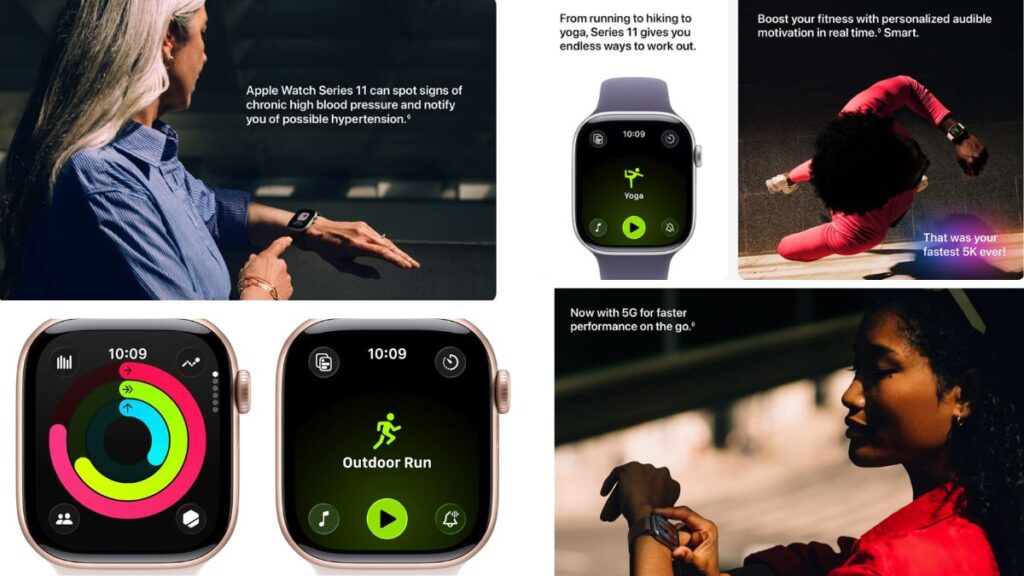
The Apple Watch Series 11 represents Apple’s most refined smartwatch update in recent years. Launched in September 2025, it arrives with a blend of enhanced health capabilities, stronger durability, improved connectivity, and updated software experiences — all packed into the thinnest Apple Watch design to date.

Design and Build
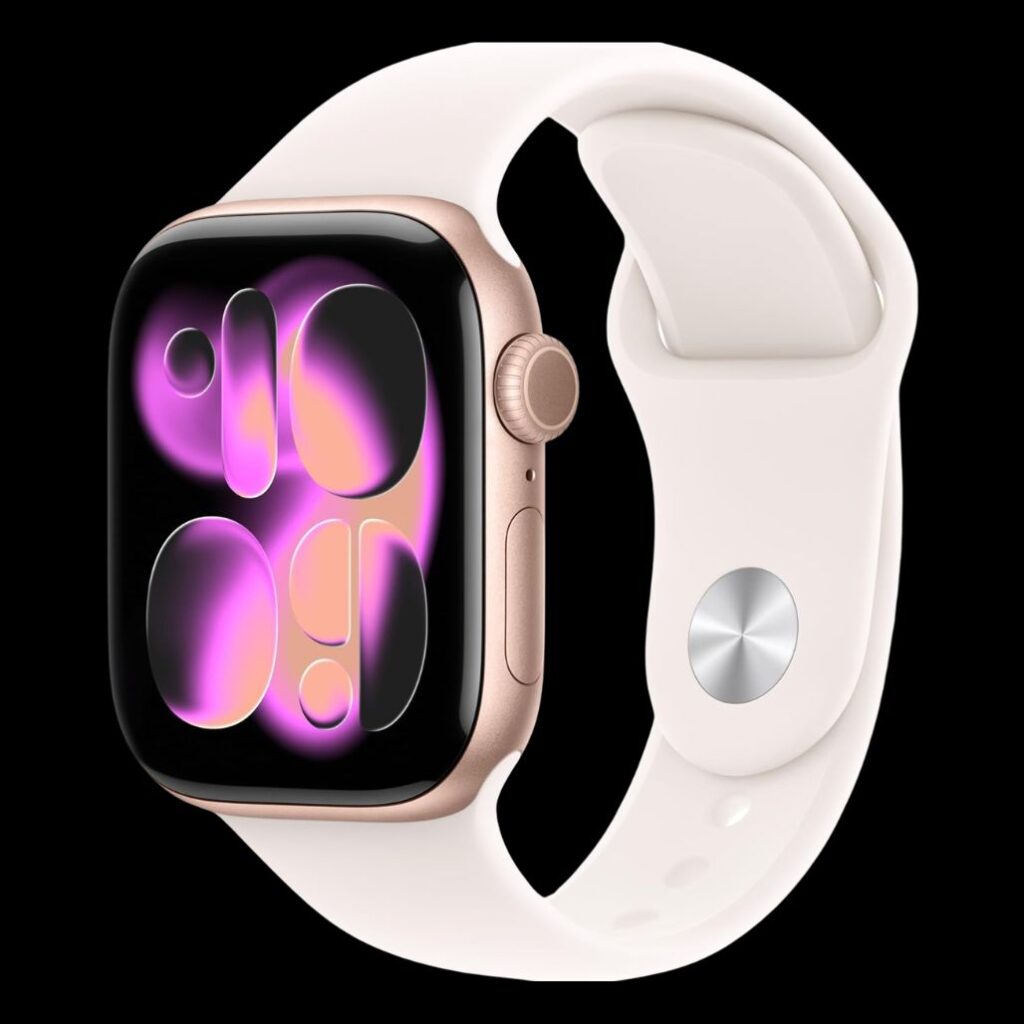
Unlike some earlier rumors suggesting a major redesign, the Series 11 continues the classic Apple Watch silhouette that users have grown to recognize — a rectangular watchface with rounded edges and thin bezels that’s both familiar and highly functional.
- Materials: Available in aluminum (space gray, jet black, rose gold, silver) and polished titanium finishes (natural, gold, slate).
Durability:
- Aluminum models feature Ion-X glass, which is twice as scratch-resistant as previous generations.
- Titanium models retain a sapphire crystal display, renowned for its resistance to scratches and cracking.
- Size: Offered in 42 mm and 46 mm case sizes, catering to a range of wrist sizes.
- Comfort: Apple touts this as its thinnest and most comfortable design yet, meant to be worn all day — and night.
Display and Performance
The Series 11 features a vibrant always-on OLED display, maintaining Apple’s signature clarity and responsiveness. While it doesn’t overhaul the display technology (no microLED yet in production models), the durability and coating innovations enhance longevity.
Under the hood, it’s powered by Apple’s latest internal silicon and optimized performance, ensuring smooth interaction with watchOS 26, which is packed with new features like Liquid Glass UI elements, wrist flick gestures, and redesigned Watch faces.
Connectivity: Introducing 5G
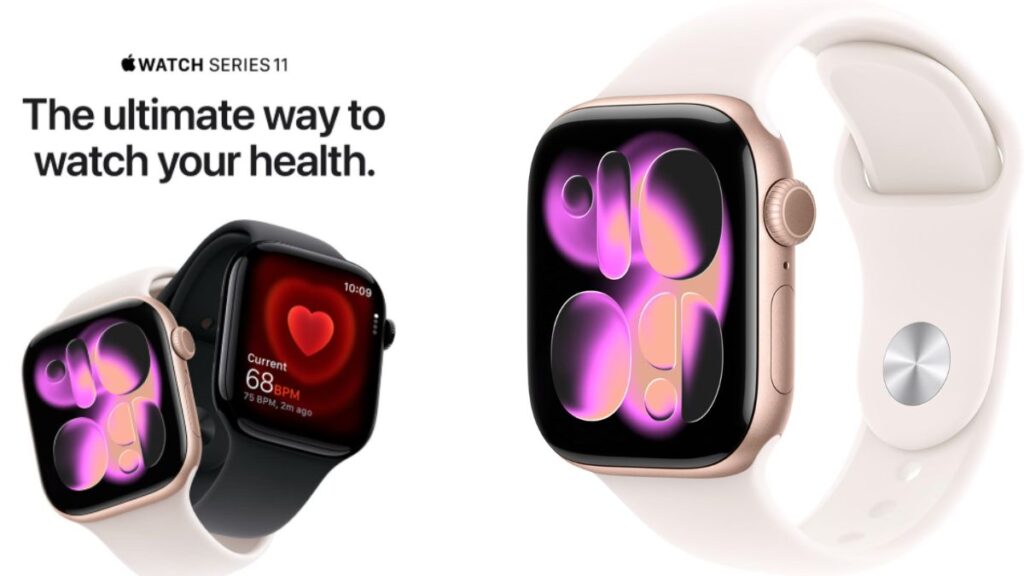
One of the standout upgrades for the Series 11 is cellular 5G support — the first Apple Watch to offer 5G connectivity through specialized 5G RedCap technology optimized for wearables.
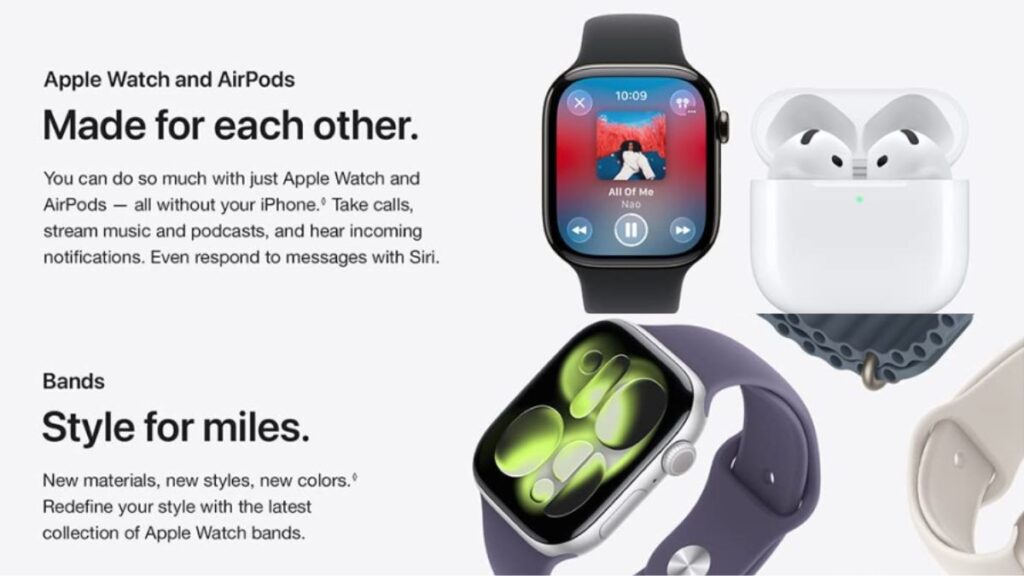
- Benefit: Users with a cellular plan can take calls, send messages, stream music, and use key apps without an iPhone nearby.
- Design: Apple redesigned the antenna system to boost signal strength, especially in weak coverage areas.
Health and Fitness Features
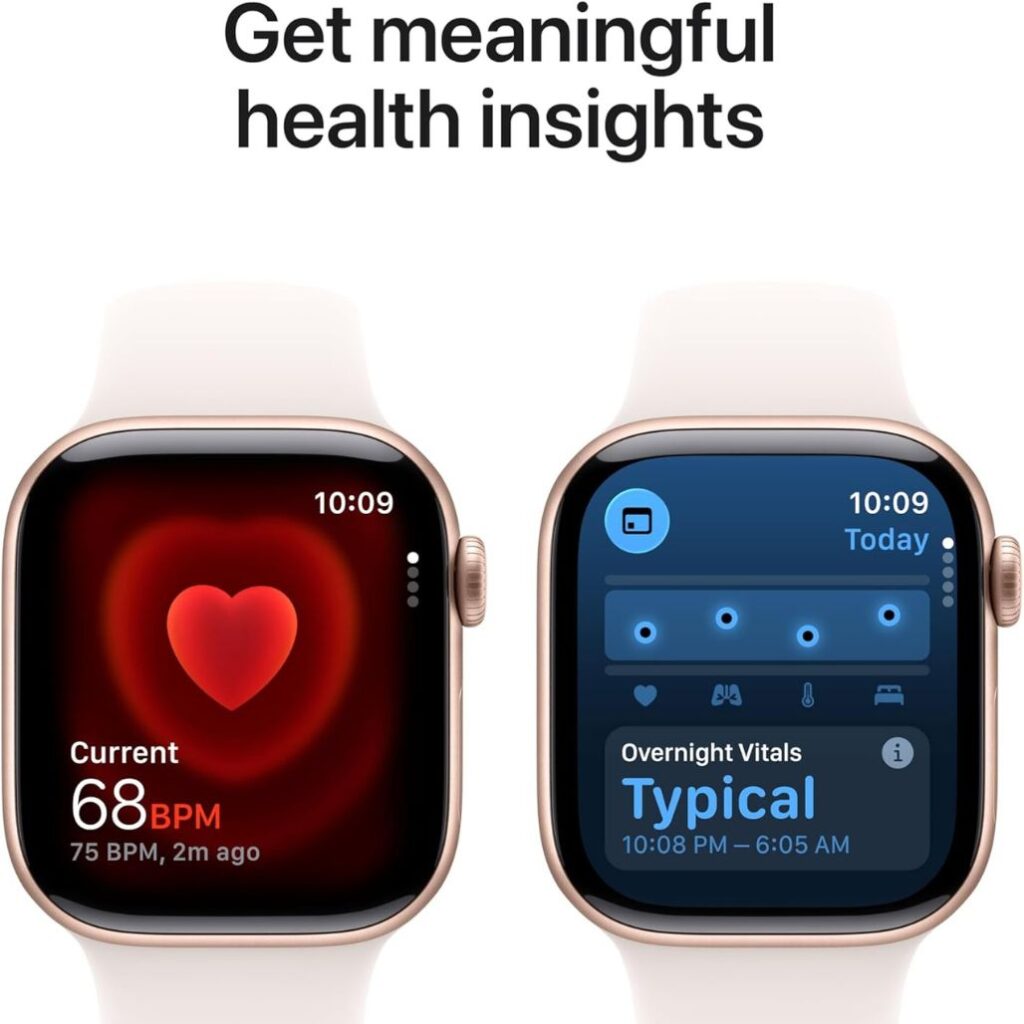
Health monitoring continues to be the focal point of Apple Watch, and Series 11 pushes it further with new insights and analytics:
Sleep Score
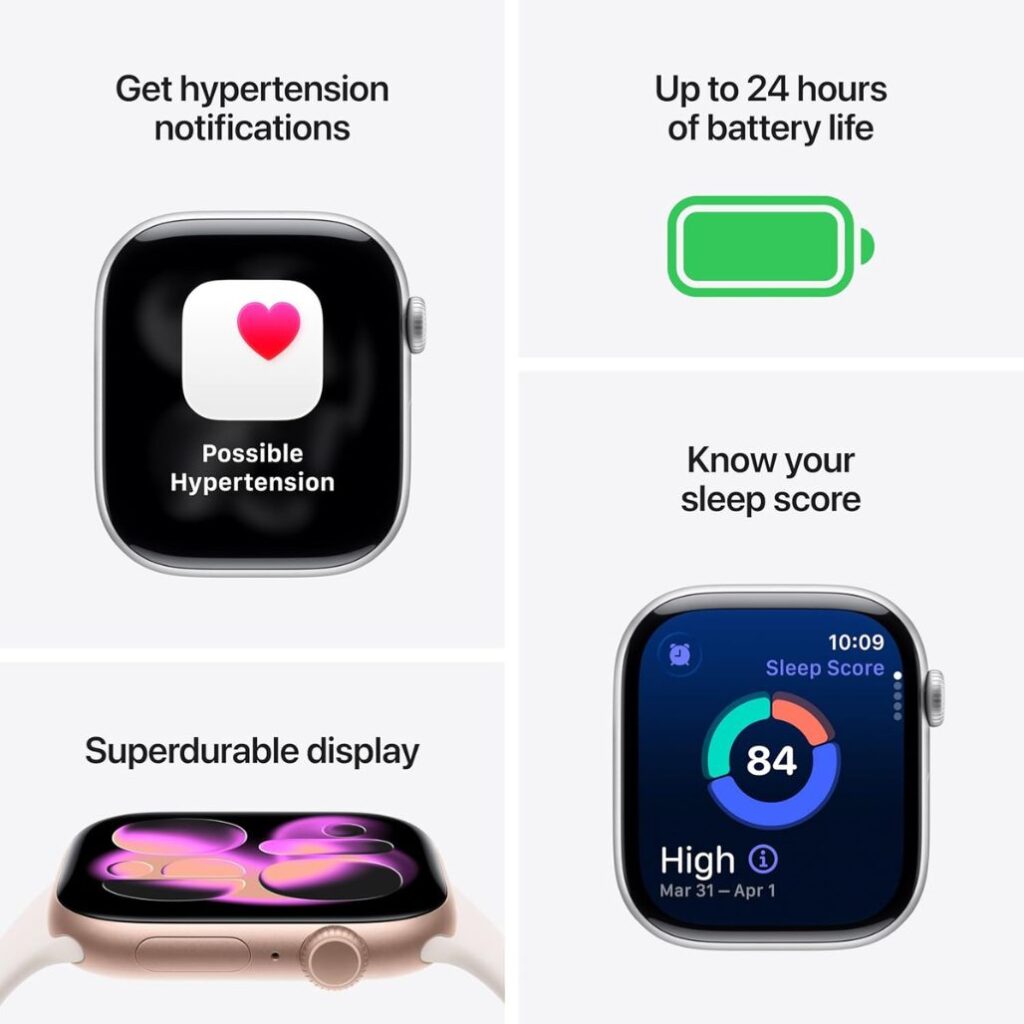
This is one of the Series 11’s flagship health features. Rather than simply logging sleep duration, it analyzes multiple sleep metrics — like bedtime consistency, sleep stages, and interruptions — and computes a comprehensive sleep score to help users understand sleep quality and trends.
Hypertension Alerts
Another major addition is the ability to identify signs associated with high blood pressure (hypertension) by analyzing patterns from the optical heart sensor over time. Alerts are delivered directly on the watch and in the health app.
Other Metrics
- Retained features include:
- ECG (electrocardiogram)
- Blood oxygen monitoring
- Advanced heart rate alerts
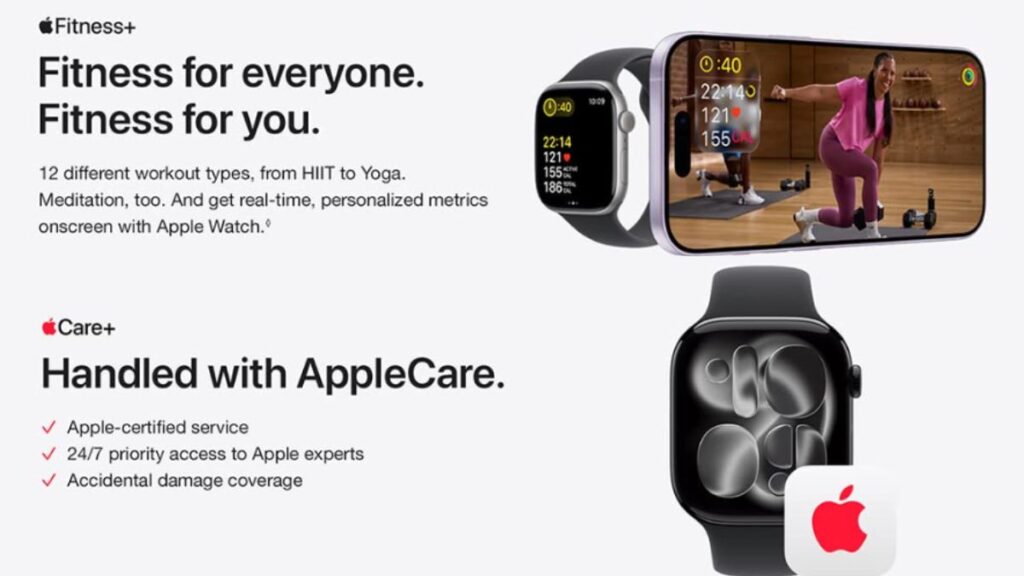
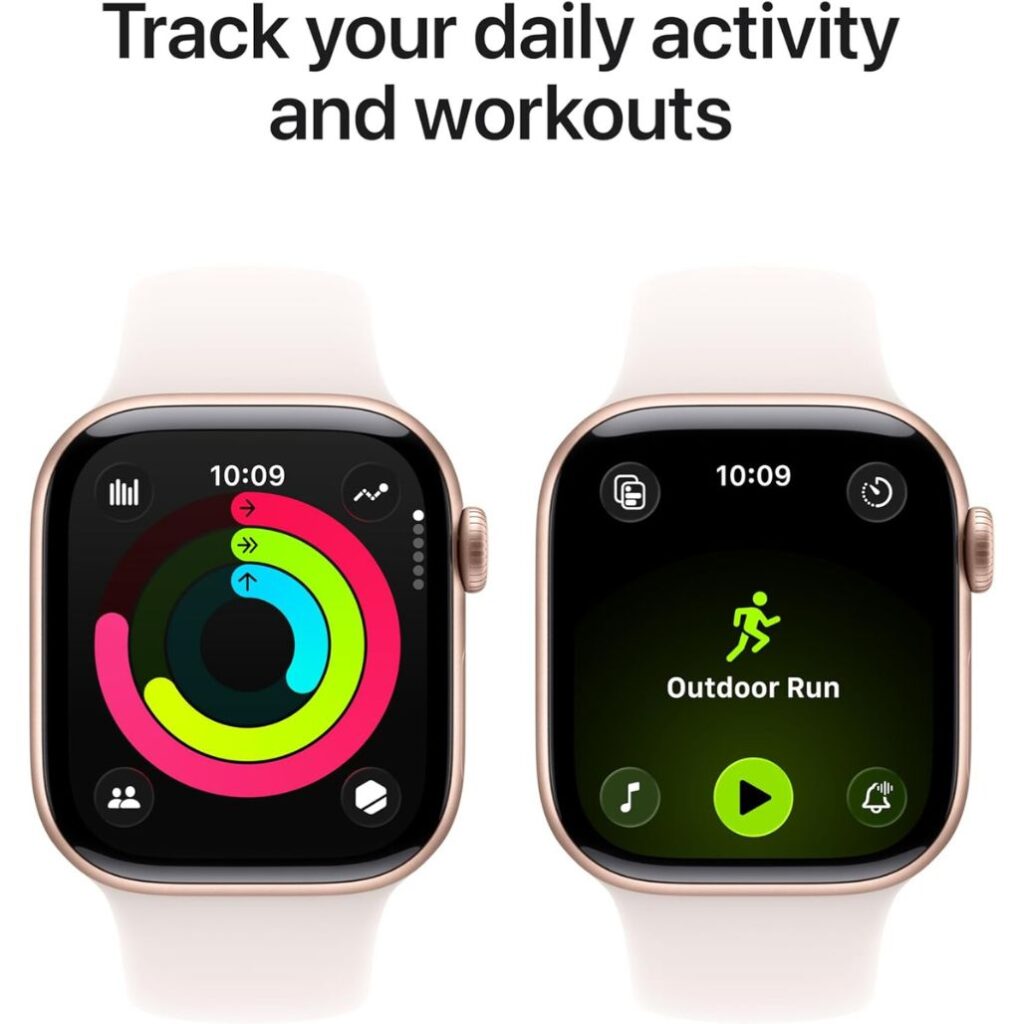
- Fitness tracking and workout data
- All operate within the robust health suite powered by Apple’s sensors and watchOS intelligence.
Battery Life and Charging
A longstanding criticism of previous Apple Watch models was limited battery life. The Series 11 officially offers up to 24 hours of battery life under typical use — long enough to wear the watch through a full day and night.
It also supports fast charging, with approximately 15 minutes of charge providing around eight hours of use — ideal for quick top-ups before workouts or sleep tracking.
User-reported experiences sometimes exceed the official rating, with some users finding the device closer to 36+ hours of regular use, depending on settings and activities.
Software Highlights: watchOS 26
The Apple Watch Series 11 ships with watchOS 26, which enhances both usability and personalization:
- Liquid Glass UI: A vibrant design and refined UI response.
- Wrist Flick Gesture: For dismissing notifications and controlling alarms without touching the screen.
- Workout Buddy: An AI-powered coach delivering real-time motivation and insights based on your personal fitness history.
- New Watch Faces: Including highly expressive options like Flow and Exactograph.
Environmental Initiatives
Apple has also emphasized sustainability with the Series 11:
- The watch incorporates ~40 % recycled content in its materials.
- Batteries and titanium/aluminum cases contain 100 % recycled metals.
- Paper packaging is fully recyclable.
These efforts align with Apple’s 2030 carbon-neutral goal across products and supply chains.
Pricing & Availability
At launch, pricing started at approximately $399 (USD) for the base GPS models, with higher prices for cellular variants and premium titanium finishes.
In early 2026, sales and promotions have brought prices down, with deals as low as $299 in some markets during sales events.
Conclusion
The Apple Watch Series 11 doesn’t revolutionize the smartwatch world with a dramatic redesign, but it solidifies Apple’s leadership with meaningful upgrades in health analytics, battery life, durability, and connectivity.
For users upgrading from much older models, the Series 11 delivers a compelling mix of new features. For those on Series 9 or Series 10, the decision may depend on how much you value 5G connectivity, sleep analytics, and health alerts.