Nike: A Complete Guide to Its Products and Brand Legacy

Understanding Nike as a Company First
Nike: A Complete Guide. Before diving into the products themselves, it helps to understand why Nike products look, feel, and function the way they do — because everything Nike makes flows from a central philosophy. Nike is not primarily a manufacturer. It is a design, innovation, and marketing company that outsources production while tightly controlling the creative and engineering vision behind every product. This distinction matters because it explains why Nike invests so heavily in research, athlete feedback, and material science rather than factory infrastructure.
Founded in 1964 by Phil Knight and coach Bill Bowerman as Blue Ribbon Sports, and renamed Nike in 1971 after the Greek goddess of victory, the company built its reputation on one core obsession: making athletes better. That obsession began with shoes, expanded into apparel, and eventually extended to accessories and lifestyle goods. However, it is worth being upfront about something important from the outset — Nike’s product identity is overwhelmingly rooted in footwear and apparel. Handbags, wallets, and sunglasses exist within the Nike ecosystem, but they occupy a very different space than the shoes, which are genuinely world-defining products. We’ll explore all of them honestly and in depth.
Nike: a complete guide. Part One: Nike Shoes — The Heart of the Brand
The Foundation of Everything
Nike shoes are not just the company’s best-selling product — they are the reason the company exists. Footwear accounts for roughly 65–68% of Nike’s total annual revenue, which exceeded $51 billion in fiscal year 2024. To understand Nike shoes properly, you need to think of them in three distinct categories: performance shoes, lifestyle/retro sneakers, and sub-brand footwear (primarily Jordan Brand and Converse). Each serves a different consumer need and carries a different cultural meaning.
Performance Footwear: Engineering in Action
Nike’s performance shoes are where its engineering legacy lives. The story begins with Bill Bowerman — Knight’s co-founder and University of Oregon track coach — who was so obsessed with shaving weight off his athletes’ shoes that he once poured liquid urethane rubber into his wife’s waffle iron to experiment with a new sole pattern. That restless ingenuity became Nike’s DNA.
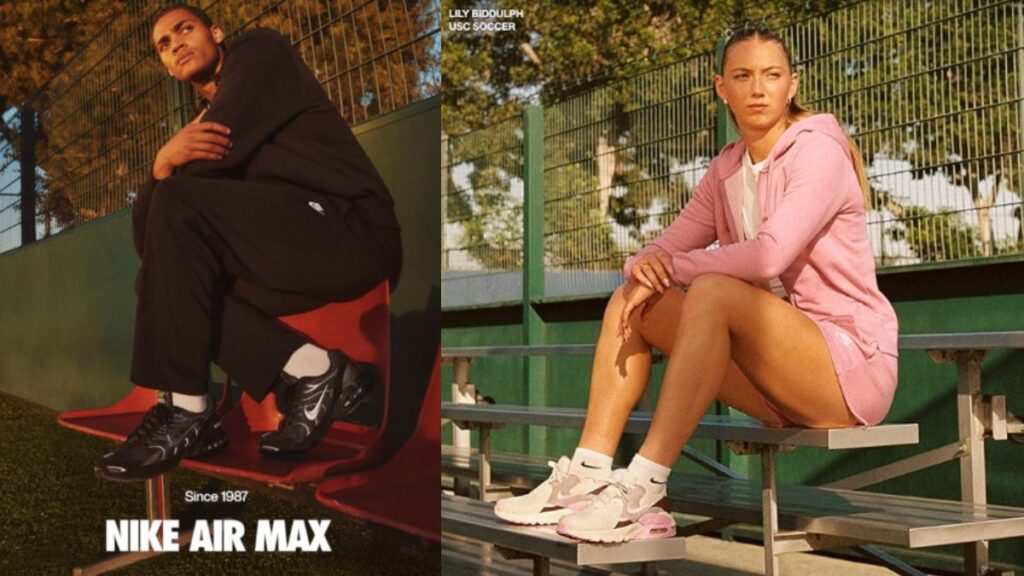
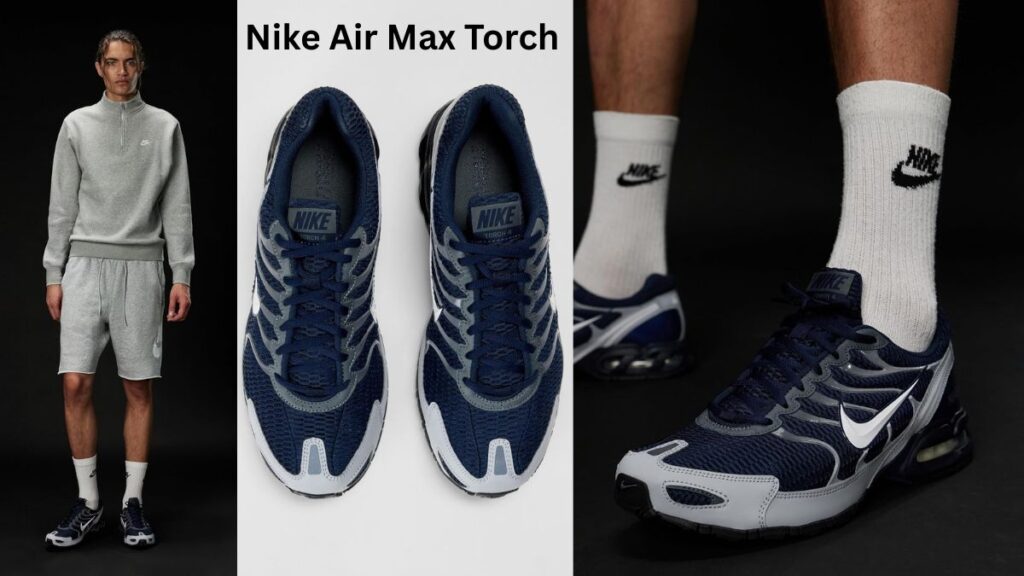
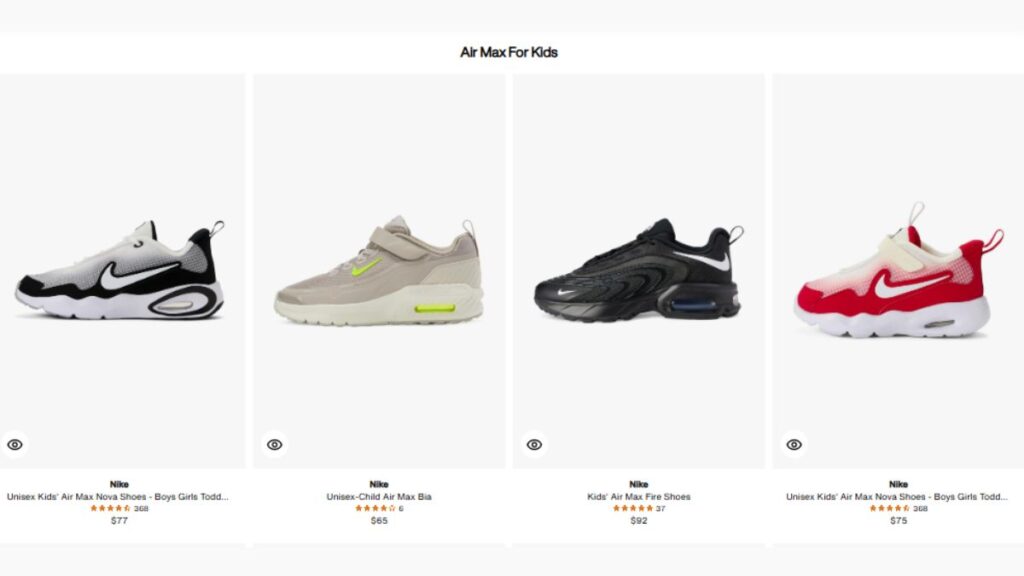
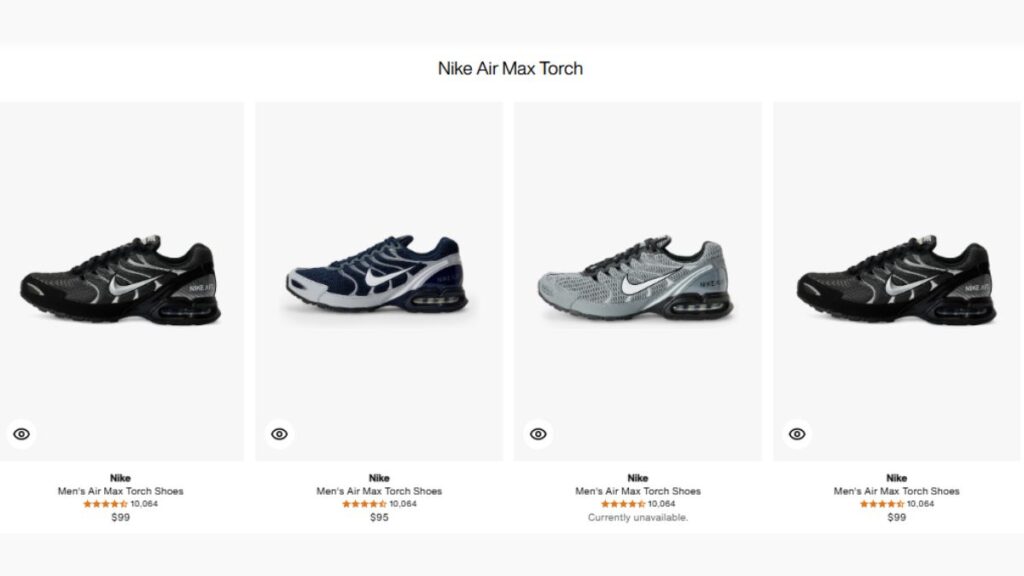
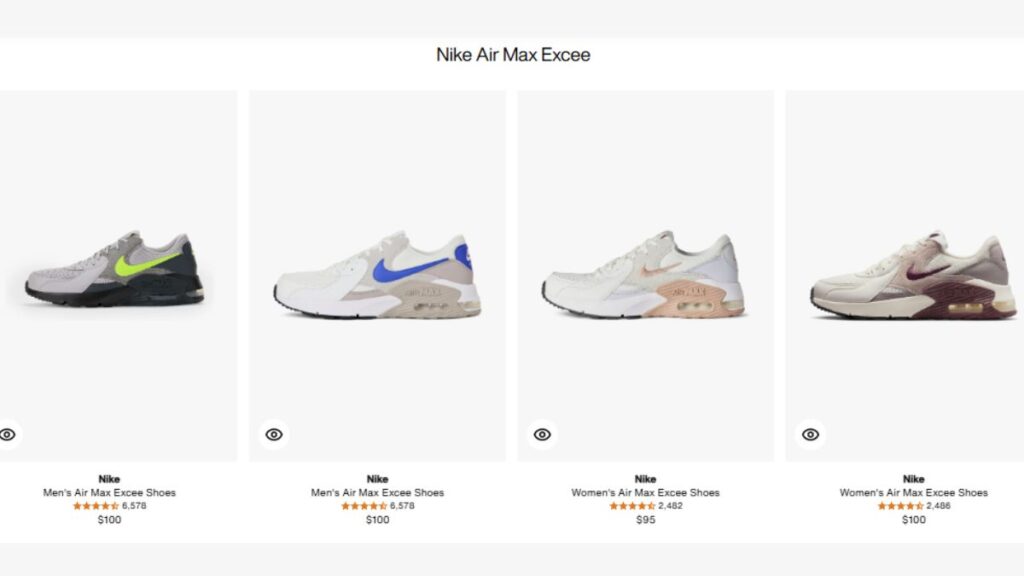
Nike Air technology, introduced in 1978, was a genuine revolution. Aerospace engineer Frank Rudy approached Nike with the idea of encapsulating pressurized gas inside a shoe sole to create cushioning. The result was the Tailwind, the first shoe with an Air unit. What made Air remarkable was its ability to absorb impact without compressing permanently — it “bounced back” consistently, unlike foam, which degrades over time. The visible Air bubble in the heel of the Air Max 1 (1987), designed by Tinker Hatfield, transformed a performance technology into a design statement, and the Air Max line has been a cultural touchstone ever since.
Fast forward to today, and Nike’s performance running line is anchored by the Vaporfly and Alphafly families — perhaps the most consequential athletic shoes ever made. These shoes incorporate a carbon fiber plate embedded in a highly responsive foam (ZoomX, made from Pebax), which stores and returns energy with each stride, effectively improving running economy by several percent. This might sound modest, but in elite distance running, a 4% improvement is enormous. Eliud Kipchoge wore a prototype of this technology when he ran a marathon in under two hours in 2019, and athletes in Nike’s carbon-plated shoes have broken world records at nearly every distance. The shoes became so dominant that World Athletics introduced regulations limiting sole thickness — a rule widely understood as a direct response to Nike’s innovation.
For basketball, Nike produces some of the most technically sophisticated court shoes in the world. The LeBron, KD (Kevin Durant), and Kyrie lines each reflect the specific movement patterns and preferences of their signature athletes — LeBron’s shoes, for instance, prioritize stability and cushioning for a power player, while Kyrie’s emphasize low-profile responsiveness for a guard who makes sharp, unpredictable cuts. For training, the Metcon series has become a staple in CrossFit and functional fitness communities for its flat, stable sole and durable construction.
Lifestyle and Retro Sneakers: Where Culture Lives
If performance shoes represent Nike’s athletic soul, lifestyle sneakers represent its cultural influence. The sneaker resale market — now worth billions of dollars globally — is driven primarily by Nike and Jordan Brand releases. Understanding this requires appreciating how Nike turned functional athletic shoes into objects of desire, identity, and even investment.
The Air Force 1, originally released in 1982 as a basketball shoe (the first to use Nike Air), has become one of the best-selling shoes in history. Its clean, chunky silhouette has been adopted by hip-hop culture, streetwear, and mainstream fashion alike. Nike releases hundreds of colorway variations every year, and limited collaborations with designers, artists, and brands can send resale prices into the thousands of dollars.
The Air Jordan line deserves its own discussion (covered in the sub-brands section below), but it’s worth noting here that the broader “retro” strategy — re-releasing classic silhouettes in new colorways — is one of Nike’s most profitable playbooks. Shoes like the Dunk, originally a 1985 basketball and skateboarding shoe, have experienced multiple cultural revivals, most recently in the early 2020s when they became arguably the most sought-after sneaker in the world.
Collaborations have become a cornerstone of Nike’s lifestyle strategy. Partnerships with Off-White (the late Virgil Abloh’s brand), Travis Scott, Sacai, Undercover, and fragment design have produced shoes that blur the line between footwear and art. These collabs generate enormous press coverage, social media engagement, and brand prestige far exceeding their actual sales volume — they function more as marketing events than commercial products.
Jordan Brand: A Company Within a Company
Jordan Brand, launched from the Air Jordan 1 in 1985, is a phenomenon that even Nike executives probably didn’t fully anticipate. When Nike signed a 20-year-old Michael Jordan to an endorsement deal for $500,000 per year — at a time when athlete deals of that size were almost unheard of — the NBA actually fined Jordan $5,000 per game for wearing the black-and-red colorway that violated the league’s uniform rules. Nike paid the fines. The controversy was free publicity, and it worked.
Today, Jordan Brand generates over $5 billion in annual revenue, making it larger than many standalone sports companies. It operates semi-independently with its own athlete roster (including Luka Dončić, Zion Williamson, and A’ja Wilson), its own design language, and a cultural cachet that arguably surpasses the parent brand among certain demographics. The Jumpman logo — that silhouette of Jordan mid-dunk — is one of the most recognized symbols in global fashion and sport.
Key Technologies Summarized
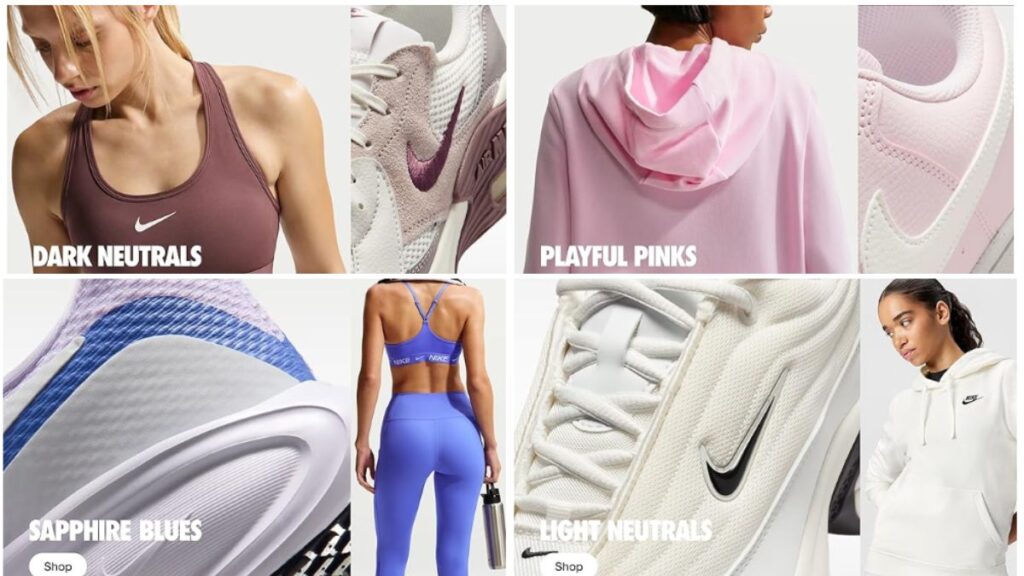
To ground all of this in something concrete, Nike’s major shoe technologies work as follows. ZoomX foam (Pebax-based) is extremely light and energy-returning, used in elite running. React foam is softer and more durable for everyday training. Air Max units provide cushioning through gas-filled chambers. Flyknit is a precision-engineered knit upper that reduces weight and waste. Free sole technology uses segmented outsoles to mimic barefoot movement. Each technology is engineered for a specific purpose, which is why a marathon racing shoe and a basketball shoe feel completely different despite both carrying the Nike name.
Part Two: Nike Handbags — A Supporting Role
Understanding Nike’s Position in the Bag Market
Here is where intellectual honesty becomes important. Nike is not a handbag company in any meaningful sense, and it would be misleading to present it alongside luxury or even mid-market bag brands. What Nike offers in this category are primarily sports and utility bags — designed to carry gym gear, sports equipment, travel essentials, or daily commuter items. They are functional, well-made, and reasonably priced, but they are not fashion accessories in the way that a Gucci or even a Coach bag is.
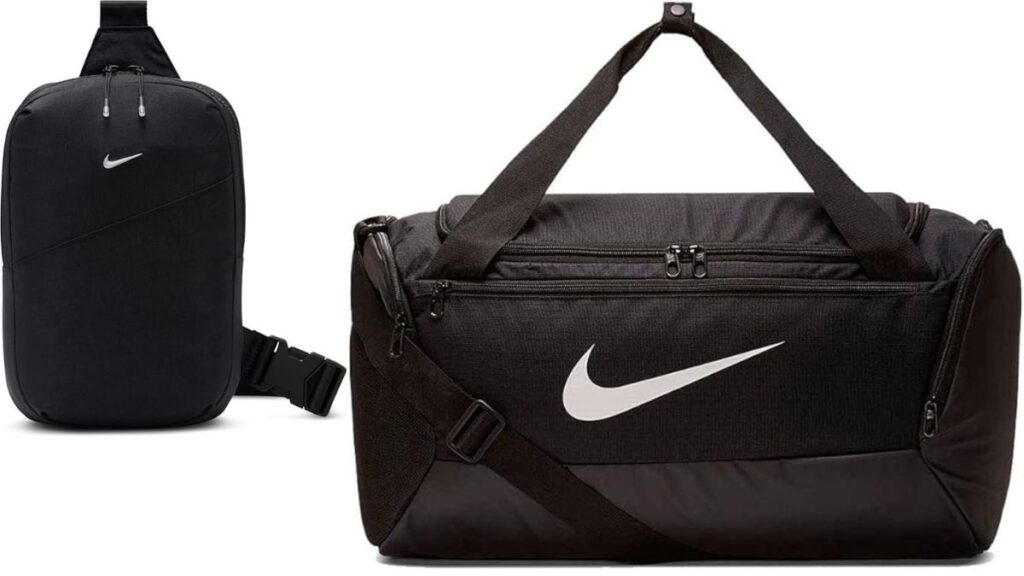
Nike’s bag range includes duffel bags, gym bags, backpacks, training totes, and drawstring bags. The most popular lines include the Brasilia series (a workhorse gym duffel available in multiple sizes), the Hoops Elite backpack (originally designed for basketball players carrying shoes and gear), and the Heritage backpack line for everyday carry.
What Nike does well with bags is exactly what it does with shoes: functional design informed by athlete feedback. A Nike duffel bag will typically feature a separate ventilated shoe compartment, water-resistant base, padded shoulder straps, and organizational pockets sized for water bottles, phones, and smaller items. They are designed by people thinking about what a person going to and from training actually needs — not by people thinking about what looks elegant on a shelf.
Prices typically range from around $30 for a basic drawstring bag to $150–$200 for premium backpacks. Occasionally, Nike releases limited collaboration bags (an Off-White x Nike duffle, for instance) that command much higher prices, but these are collectibles driven by the collaboration’s prestige rather than the bag’s functionality.
If you are looking to Nike for a fashion handbag in the traditional sense — a structured purse, a crossbody bag, a leather tote — Nike is simply not the right brand for that. It’s worth knowing that upfront so your expectations align with what the brand genuinely offers.
Part Three: Nike Wallets — Minimal but Functional
A Niche Category for an Athletic Brand
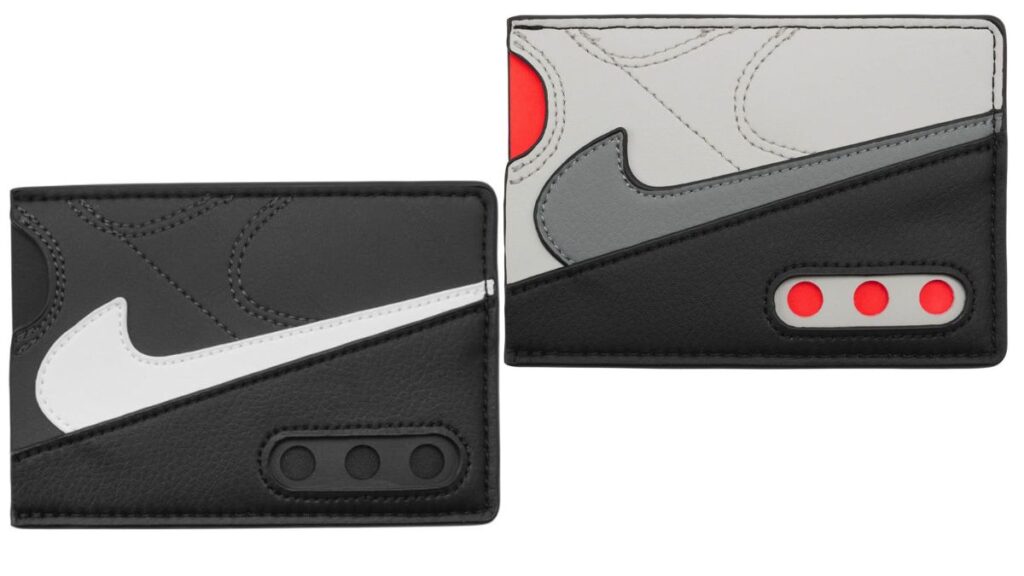
Nike’s wallet offerings are similarly rooted in utility rather than luxury. The brand produces a modest range of wallets, cardholders, and small accessories primarily made from synthetic materials, nylon, or Ripstop fabric — the same materials philosophy applied to its athletic gear.
The typical Nike wallet is slim, lightweight, and durable. You’ll find bifold wallets, cardholders, and small zip-around coin wallets, often in the $20–$40 price range. Some are designed specifically for athletes — thin enough to slide into a running vest pocket or secure in a small gym locker. The Nike Fundamental Wallet and similar styles reflect this philosophy: minimal bulk, secure closure, and the kind of durability you’d expect from a brand that thinks about its products being used under physical stress.
The important context here is that Nike does not compete in the premium leather goods market. If you are comparing Nike wallets to those from a brand like Bellroy, Fossil, or luxury houses, you are comparing fundamentally different product philosophies. Nike wallets are athletic accessories; the others are fashion or lifestyle items. Nike’s strength in this category is simply that someone who already uses Nike gear can maintain a consistent, functional ecosystem of accessories from a brand they trust.
Part Four: Nike Sunglasses — Performance Optics
Where Sport Science Meets Eyewear
Nike’s sunglasses line is actually more developed and technically impressive than many people realize — primarily because Nike approaches eyewear the same way it approaches footwear: through the lens of athletic performance (pun intended).
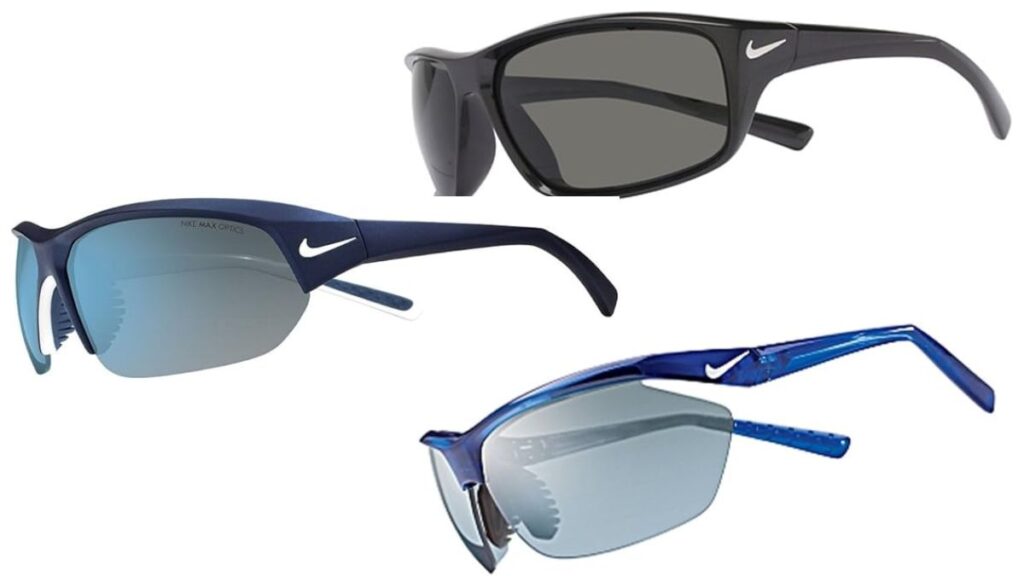
Nike partners with Marchon Eyewear for the production and distribution of its optical frames, and the performance sunglasses line is built around real sport-science principles. The Nike Skylon Ace, Windshield, and Show X lines are designed for runners, cyclists, and field sport athletes who need eyewear that stays in place during intense movement, shields against wind and debris, and provides optical clarity under varying light conditions.
Key features in Nike’s performance sunglasses include wrap-around frames that reduce peripheral light intrusion, ventilated lenses to prevent fogging during high-exertion activities, rubber nose pads and temple grips for secure fit during movement, and tinted or polarized lens options tuned for specific sports environments (bright outdoor tracks, water sports, indoor courts with artificial lighting).
Nike also uses its Max Optics technology in higher-end sunglasses, which refers to lens geometry optimized to provide consistent optical precision across the entire lens surface — particularly important in wrap-around styles where lens curvature can otherwise distort vision at the edges.
Prices range from roughly $60–$80 for entry-level sport frames to $150–$200+ for premium performance or prescription-compatible frames. Nike also produces a fashion-forward eyewear line under the Nike Vision umbrella, which is more lifestyle-oriented, with styles designed for everyday wear rather than sport.
One thing worth noting is that Nike sunglasses occupy an interesting mid-tier position in the eyewear market — they are more technically sophisticated than generic fashion sunglasses but less premium than dedicated performance eyewear brands like Oakley (owned by Luxottica) or Rudy Project. For a serious athlete who also cares about brand consistency, they represent strong value.

The Bigger Picture: How These Products Fit Together
What ties all of these products together — shoes, bags, wallets, and sunglasses — is Nike’s fundamental identity as a brand that starts with the athlete and works outward. The shoes are world-class because decades of biomechanical research, material science, and athlete collaboration have gone into them. The bags are well-designed because they were conceived by people thinking about what a basketball player or marathon runner actually needs to carry. The wallets and sunglasses are functional and reliable for the same reason.

Where Nike is strongest, it is genuinely among the best in the world. Where it is more modest — like in fashion bags or luxury accessories — it doesn’t pretend to be something it’s not. That clarity of purpose is, perhaps counterintuitively, one of the things that makes Nike such an enduring and trustworthy brand. It knows what it is, and it executes that identity with remarkable consistency across more than five decades.
Similar Products Here